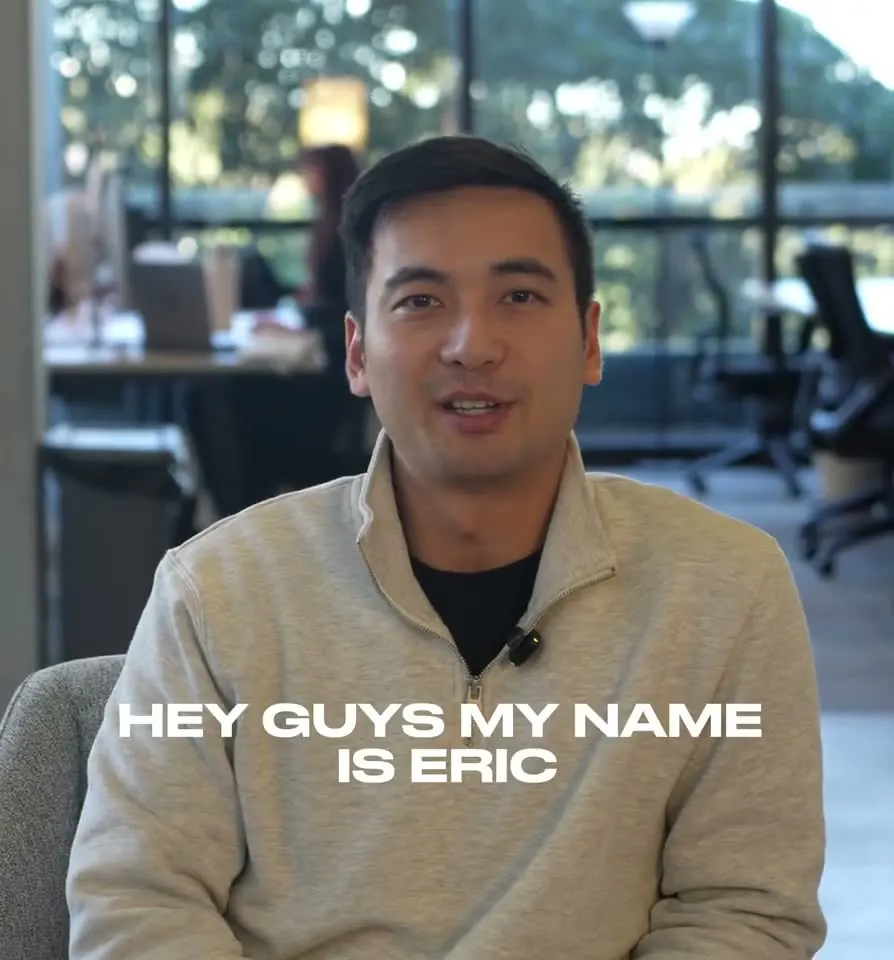
Video testimonial from Eric Fan, Founder and CEO, Lumos.
 Eric FanFounder and CEO, Lumos
Product design
UX and UI design for software with a lot going on. We help product teams make setup, everyday tasks and difficult decisions easier to follow.
















Audit findings in the order to fix them, flows and a prototype for the journeys in scope, interface designs for every screen and state, and a design system in Figma and, where it is in scope, in code.
Product design starts from $10,000 a month. An embedded team is $10,000 to $30,000 a month. To try working with us first, you can take one week, such as a UX audit or a product sprint, for a fixed $2,500.
Four to six weeks for a focused piece on one area of the product. Ten to sixteen weeks for a full engagement across it. A first piece of work is one week.
You need one screen restyled this week, nobody on your side can make a decision, or you want the product to look newer and behave exactly as it does now.
Narrower pieces of this work, each one you can start with.
Video testimonial from Eric Fan, Founder and CEO, Lumos.
Eric FanFounder and CEO, Lumos“Refract has killed it again. We call your team FEDEX because you always deliver!!”
 RohithCOO, Managed
Video testimonial from Helen Murdoch, Founder, DoughPro.
 Helen MurdochFounder, DoughPro
At Keeyu, the work centred on the relationships between setup, operations and the customer’s next action. Reusable patterns helped connect those journeys. A design system should carry those decisions forward along with the typography, colour and components.
Inventory the patterns people already use and identify where they behave differently.
Document when a pattern applies, what content it needs and how it responds to errors.
Agree component behaviour with the people implementing and maintaining it.
Agree the user, task and success criteria. Review the live product and the evidence available.
Map the flow and prototype the decisions that carry the most uncertainty.
Test with representative users where the scope allows, and review feasibility with engineering.
Resolve the states and details, document the pattern and review it in implementation.
Bring a product link, one difficult journey and the decision your team needs to make.
A focused review with prioritised findings, evidence and the next changes to investigate.
A defined problem, a prototype and a plan for what to test or build next.
Design support alongside your product and engineering team as the work develops.
Yes. We can begin with one journey or an audit of the existing experience. That may lead to a redesign, or to a smaller change in structure, wording or behaviour.
The flows, interface designs, relevant states and reusable component guidance we’ve scoped. We settle the prototype format, documentation and implementation review with your team before starting.
It can be. Design and build can be scoped separately or together. We can work with your engineers, or build it ourselves: the people who design it also build it, so nothing is lost between a design file and the code.
Product design starts from $10,000 a month. The price depends on the journeys involved, research access, technical constraints and deliverables. Send us the product, the problem and your budget range and we’ll recommend an engagement to fit.
A focused piece of product design on one area of the product usually takes four to six weeks. A full product design engagement usually takes ten to sixteen weeks. We agree the scope and the timeline before we start.
Three ways. A UX audit is a focused review with prioritised findings, evidence and the next changes to investigate. A product sprint takes a defined problem to a prototype and a plan for what to test or build next. An embedded design team works alongside your product and engineering team as the work develops. The audit and the sprint have their scope and price agreed upfront.
Pick a measure tied to the task, such as successful setup, recovery from an error or support demand. If there’s no baseline, working out what to instrument is part of the job. A polished prototype alone is not evidence of improvement.
Yes. Our studio is in Sydney, and most of our product design has been for young software companies. Keeyu and Atrium had each raised a pre-seed round when we began, and Lumos and Managed were at seed. We usually work with companies that have raised a seed or Series A round, and take on earlier ones where we can see a long partnership.
Yes. On Keeyu we worked inside the team, beginning in their staging environment and meeting product and engineering every week. An embedded team costs from $10,000 to $30,000 a month. It runs by the month and you can change it as the work changes.
Yes. We built the design systems for Keeyu, Lumos, Managed and Atrium in code, alongside the design work in Figma. A design system can be one part of a product design project or a piece of work in its own right, which suits a product that has grown one component at a time.
Yes. We designed the DoughPro app, and on Atrium the mobile product was designed as part of the same system and tested on the device. For Lumos we designed the planning surface, including its asset map, measurement dashboard, scheduler and reporting table.
An audit finds the problems in the product you have and puts them in order. A redesign changes the product. The audit comes first because it shows how much has to change. Sometimes that is a new structure, and sometimes it is a short list of changes to wording, order and behaviour.
Send us the product and tell us which task. We’ll say what we’d look at first.
Most teams start with a call, then a sprint or an audit.








The people you’d work with, from the first call to launch